Four months ago, I organized for 25 people to go to Patagonia and test the theory that “IRL” is indeed infrastructure.
I organized and lead the Human Tech residency at Edge City Patagonia, and it was life changing for everyone invovled. I wrote in September about my theories on designing spaces where ideas compound by removing friction, making room for the unexpected, all that.
Now I’m back home in France with enough distance to see the true results of all of this, from what happened during those ten days and what’s still being built as a result. There are multiple projects still going, and collaborations that didn’t end when everyone went home. Participants are still talking about it and some people’s lives did a 180 because of the projects they started there.
We’re at this weird inflection point where getting together in person is turning into infrastructure, and I’m so excited about it.
What Went Down
25 people. 10 days. San Martín de los Andes - mountains, lakes, off-grid beauty that makes you feel appropriately small. Not just “touching grass” but becoming one with it.
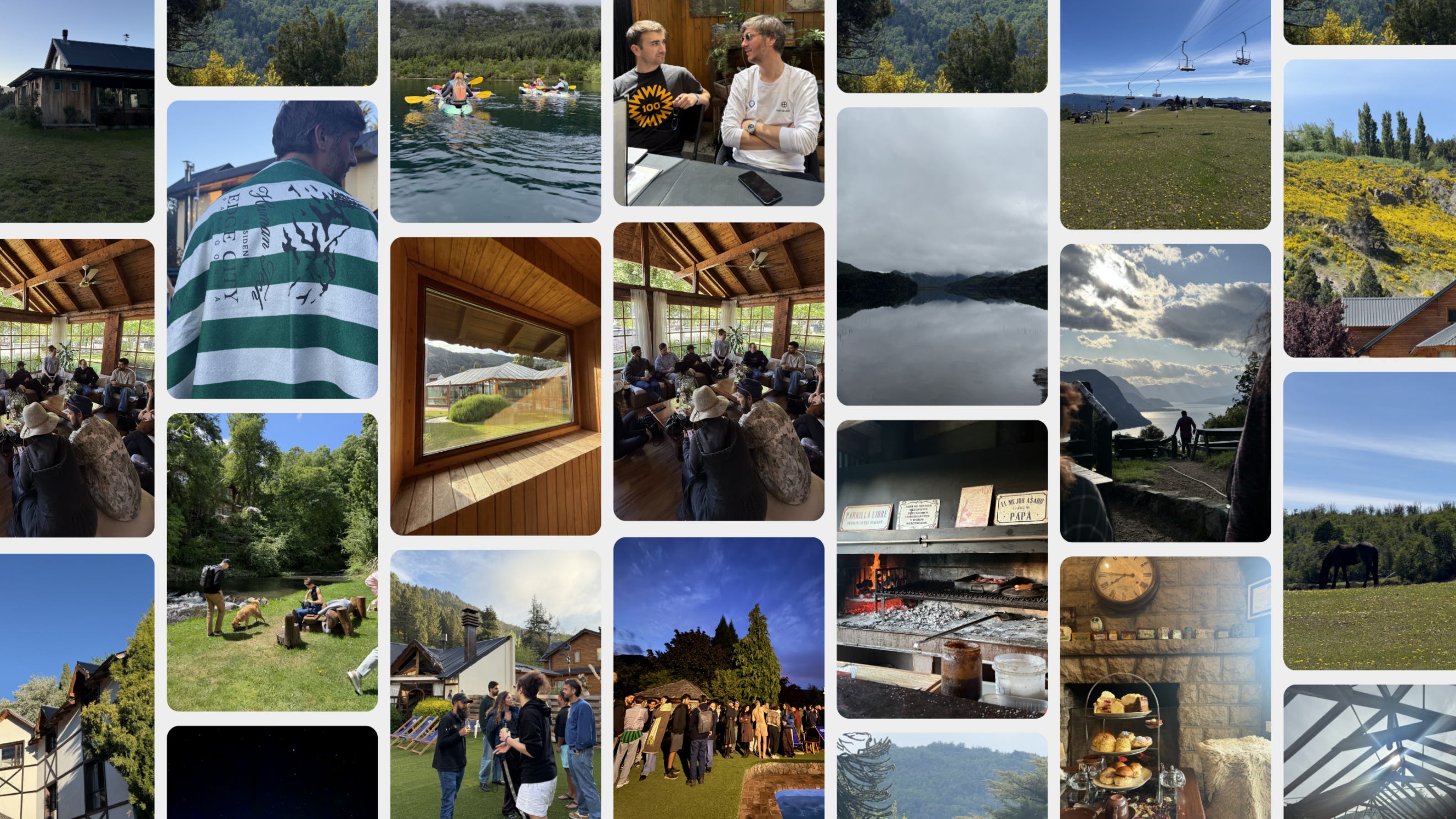
We gathered cryptographers, filmmakers, economists, founders, and designers in the mountains of Argentina to build around one idea: technology should defend human agency, not erode it. AKA d/acc. For those wondering how we paid for this - it was hosted by my client human.tech and sponosred by Universal Profiles.
I’ve become increasingly passionate about d/acc over the past year. And I think the biggest challenge right now isn’t the technical development but the storytelling. Making these ideas accessible, making people actually think about them whether they’re in education, industry, or just living their lives. We need d/acc to go mainstream, and that requires cultural infrastructure.
The brief for Patagonia was to create conditions for people to build together around these principles and see what emerges.
The numbers: 11 projects. 13K+ manifesto signatures (since launch at the residency). 15 visions published. 172 relationships mapped in the social graph. Projects ranged from documentary film to governance frameworks to neurotech systems.
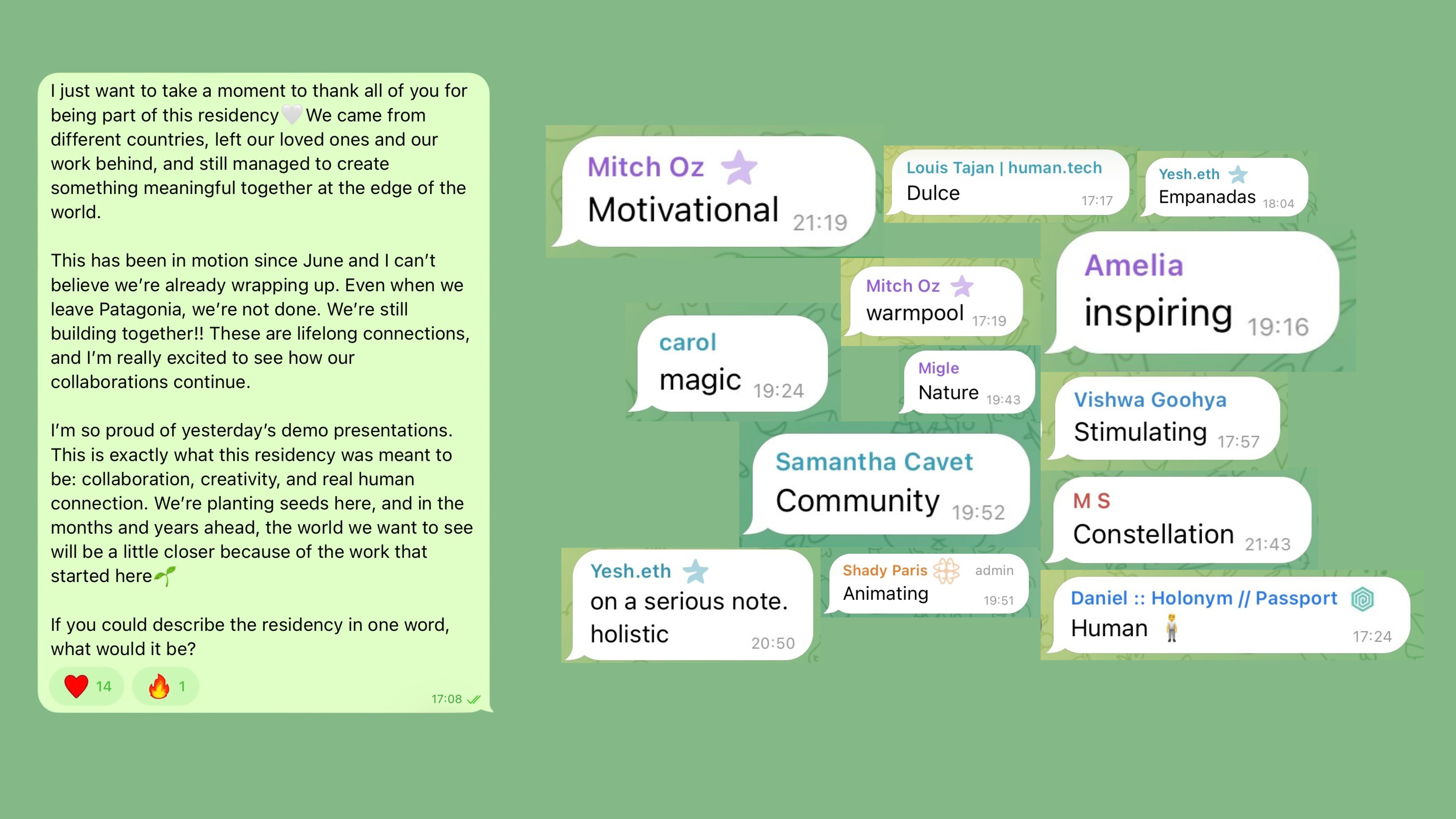
But those fancy numbers really don’t capture it. What captures it is what participants said: “holistic”, “constellation”, “animating”, “magic”. One person arrived drained after years in public goods but left with a project that mattered to them. It is now being built and presented to governments. I saw the sparkle in his eyes come out mid-way through the residency, and I felt so honored to have been a part of bringing that back to him.
I’m interested in the seeds that were planted in Patagonia, what they’ve grown into today, and where the metaphorical pollen might spread later.
When Disciplines Collide
There’s a concept called System 3 thinking - coined by Michael Anton Dila - that I kept coming back to during the residency. Not System 1, the fast instinctive kind. Not System 2, slow and deliberative. A third mode that only exists between people IRL. Collective intelligence that doesn’t belong to any individual. Ideas no single person in the room could have conceived alone.
I watched it happen in real time.
A cryptographer with a PhD in privacy talking to a filmmaker. A founder building in post-communist Romania connecting with an economist from Buenos Aires. A designer from Berlin who’d toured as an electronic music producer while building an AI solution for neurodivergents.
These people don’t naturally share a language. They probably wouldn’t be in the same room otherwise. That friction between disciplines, perspectives, and frameworks is exactly where it got interesting.
Reputation as Currency
Something is changing in how value moves between people as it has become easy to fake identity online and/or remain anonymous. To perform credibility, manufacture followers, say whatever with zero stakes. People are feeling it. And the response is people meeting IRL to confirm and prove their humanity — going out of their way, literally flying across the world, for it. "Dead Internet" isn't only a content problem, but a connection problem.
The rise of IRL events and popup cities reflects something deeper than nostalgia. It’s less transactional than it used to be. The currency has evolved - from breadth to depth, from follower counts to being genuinely known by a tight group of people who matter. People who’ll vouch for you, pull you into rooms, and share what they’d never post publicly.
Reputation isn’t vanity metrics or how strangers scroll past you online. It compounds through consistency, what you do when no one’s watching, and through how you show up in your community over time. The real value is offline and behind the scenes. The ideas, the access, the introductions exist because of a specific alchemy of people and specific setting.
This played out in Patagonia. The 25 people were chosen because they were at inflection points with a unique POV or challenge statement. They came because they were curious about something they knew they couldn’t figure out alone.
Human-First, Digital-Enabled
Things are changing rapidly in front of our eyes, its almost tangible. "Touching grass" has outgrown the meme and become a legitimate strategy. For thinking more clearly, building more originally, and showing up in rooms in a way that actually registers. Presence is the new edge. And it turns out, you can't fake your way into it from behind a screen.
Patagonia proved this to me.
The environment was human-first, but strategically digital-enabled. Remote enough that you couldn’t fake presence or half listen through a Google Meet. At the same time, Universal Profiles mapped connections in real time. Every collaboration, every cross-pollination, every new edge forming between disciplines.
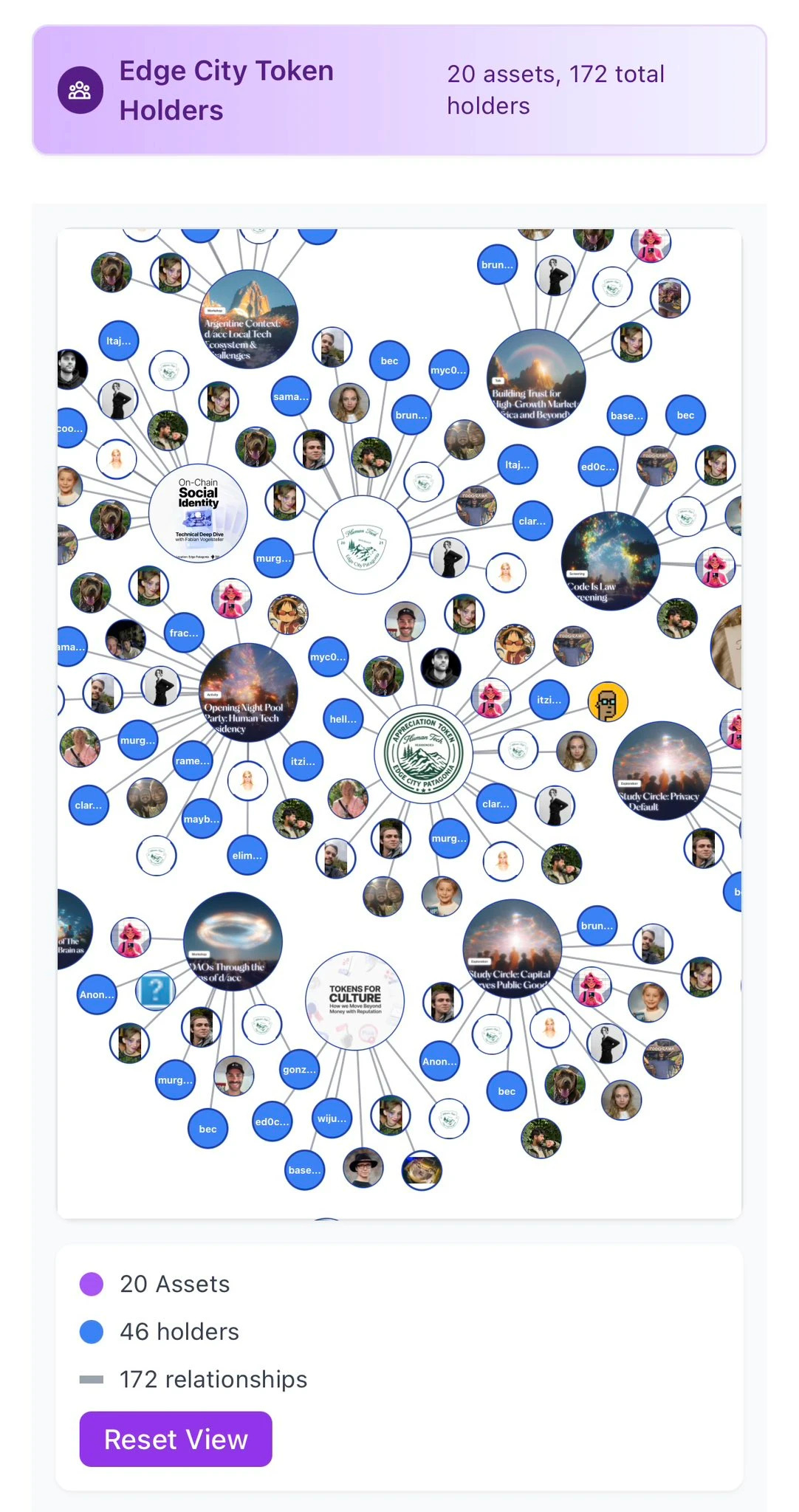
The technology made emergence visible, but did not replace the human layer.
This is the architecture I care about: containers where people are deeply present and building serious things together. Where dialogue sharpens ideas, difference creates friction, and friction creates signal.
Breakthroughs happened in the margins - on kayaking trips, over shared meals, during late night sessions when rough concepts became working prototypes “by accident” almost.
Collective intelligence isn’t mystical but structural. It pokes its little head out when the right people are placed in the right context with enough spaciousness to think together. And that’s the beautiful point.
Edge City and Cultural Infrastructure
2026 has arrived and it's analog. Edge City is proof of it.
What they get right is the architecture. Not the physical kind, but the structural thinking behind how a place comes to life. Timour Kosters , co-founder, talks about building with emergence in mind — which basically means: design the container, then get out of the way. Leave room for the community to actually shape the thing. Let the village become itself.
This is what I mean by thought-through infrastructure, not hippie aesthetics. These aren’t people abandoning careers for communes. They’re builders, researchers, artists finding there’s a different way to work - deep presence AND thriving career. Serious intellectual work through dialogue. Families participating in multi-generational communities while staying digitally connected to global networks.
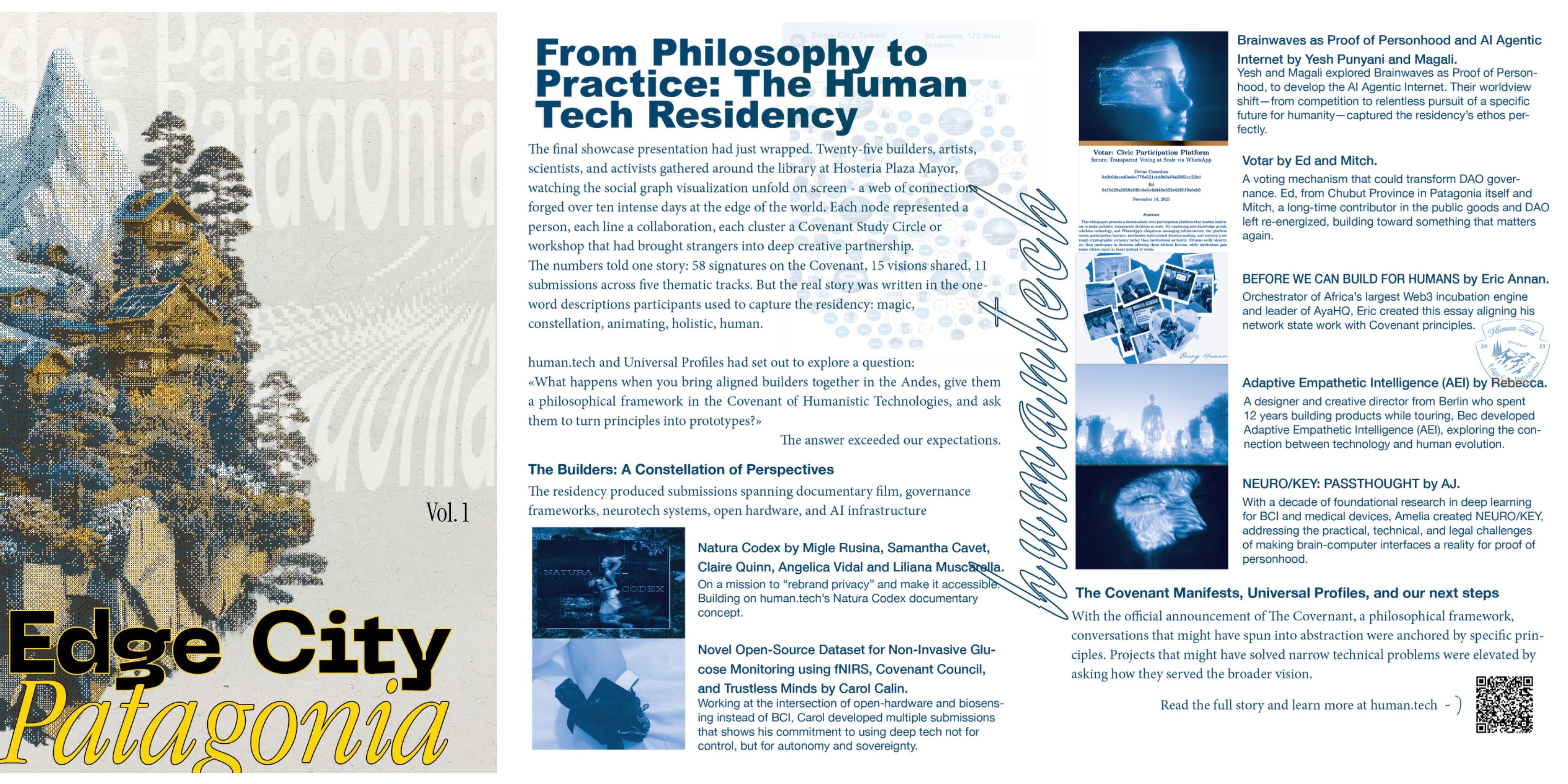
The temporary nature is part of the architecture. Show up for a month, plug into high signal community, build intensely, return to your life with new collaborators and energy. Not settling down in the traditional sense. Creating containers for transformation you opt into when they serve you.
I do believe a more permanent version of this will also provide a lot of value one day. I dream of this often.
What I Learned As The Residency Organizer
The guest list is everything.
Context precedes emergence.
Structure + spaciousness is hard.
Some friction is productive.
Brand is world-building. (Already knew this 😉)

Limited edition merch for the residency (creative directed by yours truly)
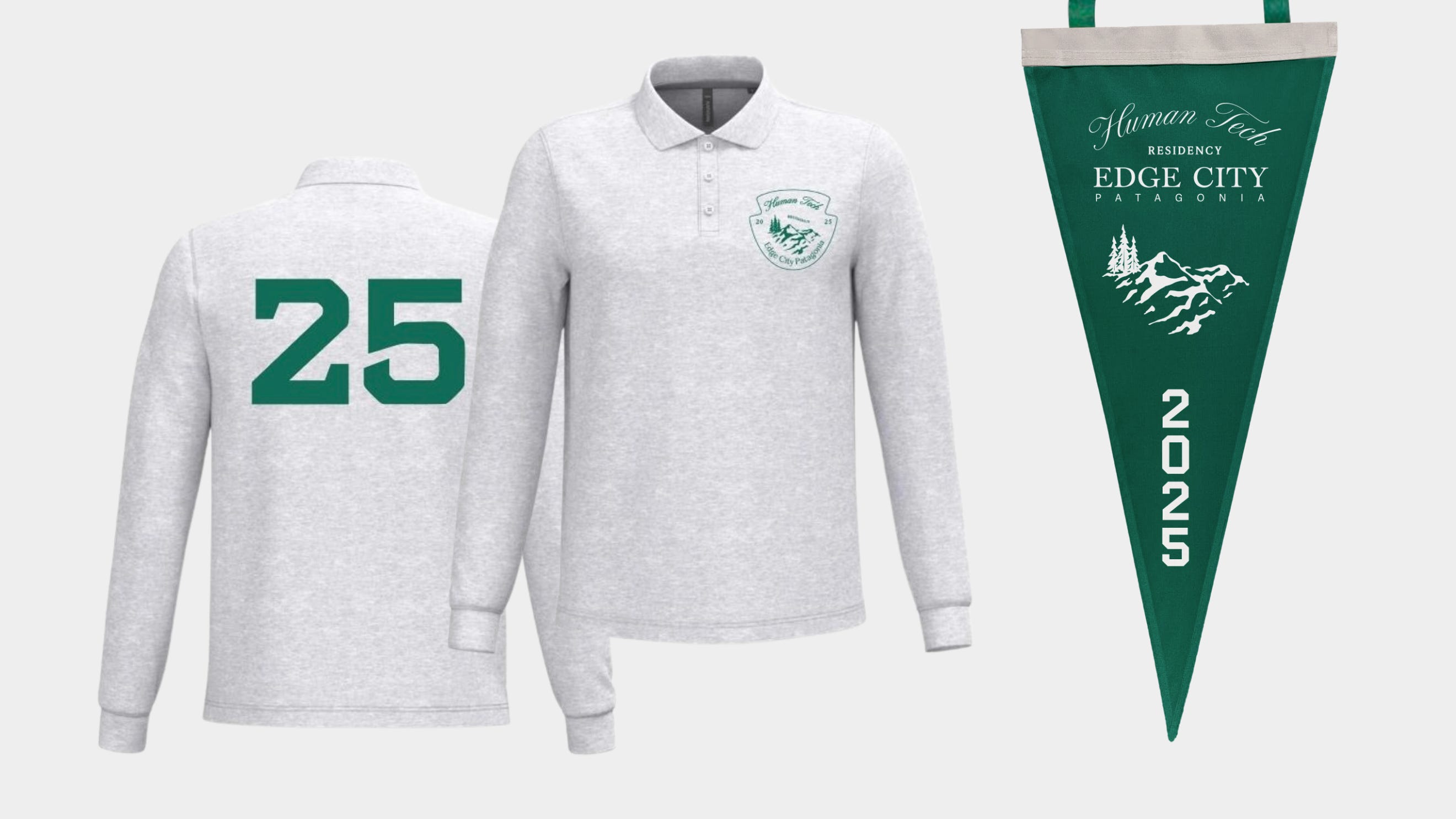
What’s To Come
This is the type work I’m committed to. Cultural infrastructure that creates conditions for collective intelligence to emerge. It doesn’t always have to be a residency, but more IRL brand moments where cultivating vibes and energy is the deliverable.
There will me more residencies in development. Each designed around different contexts and questions, but all optimized for spaces where people surprise themselves.
I’m watching what other groups are doing, from multi-generational communities, reading seminars, weekly office hours at consistent locations, community campuses, third spaces etc.
We’re in a moment where radically experimenting with social forms is possible and in demand. Where you can design experiences as infrastructure and amazing moments for brands.
I choose to remain optimistic during these rapidly evolving times, to hopefully land on the side of progress, rather than the side that ultimately gets left behind.